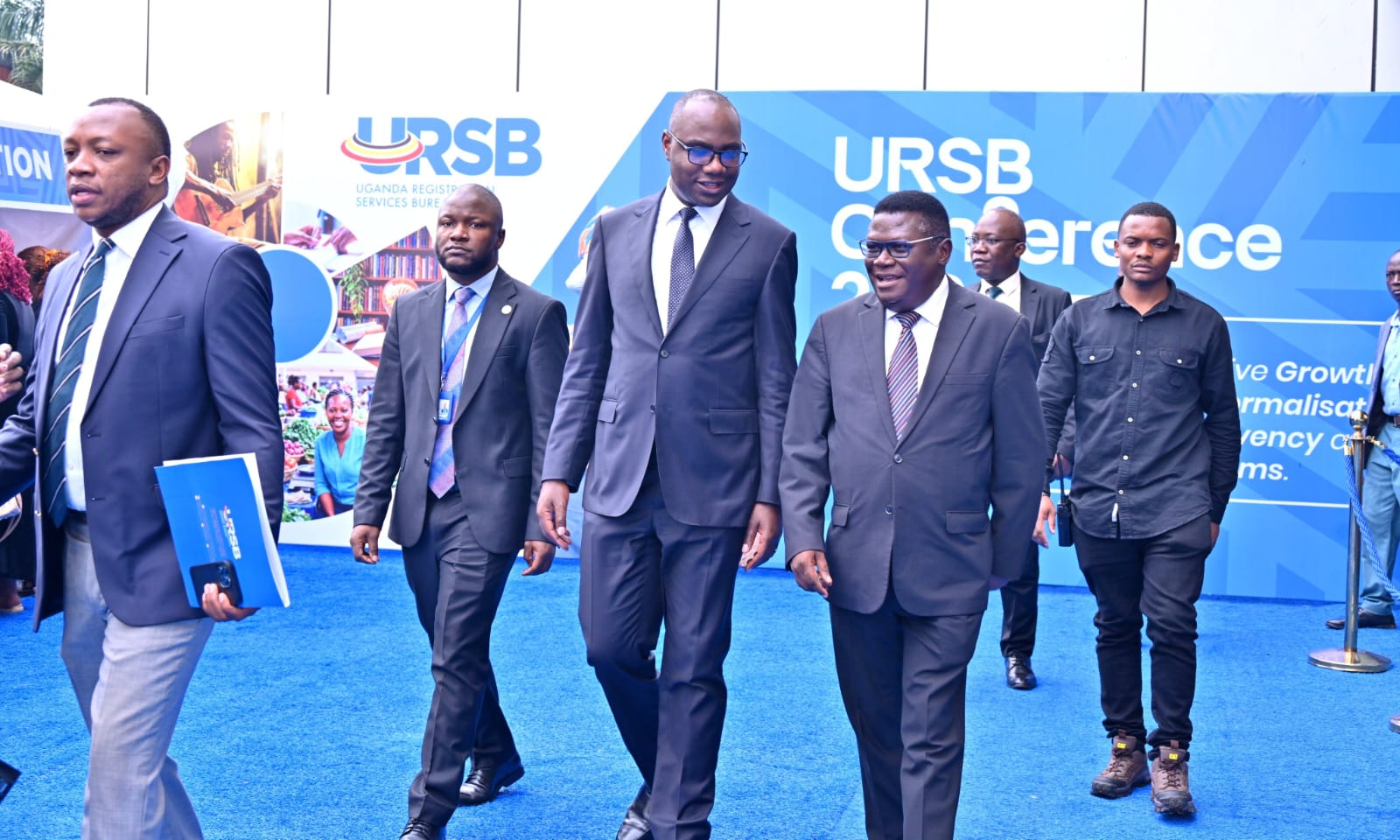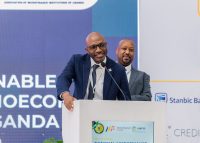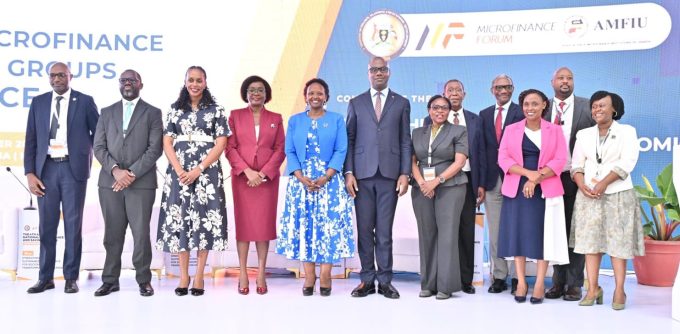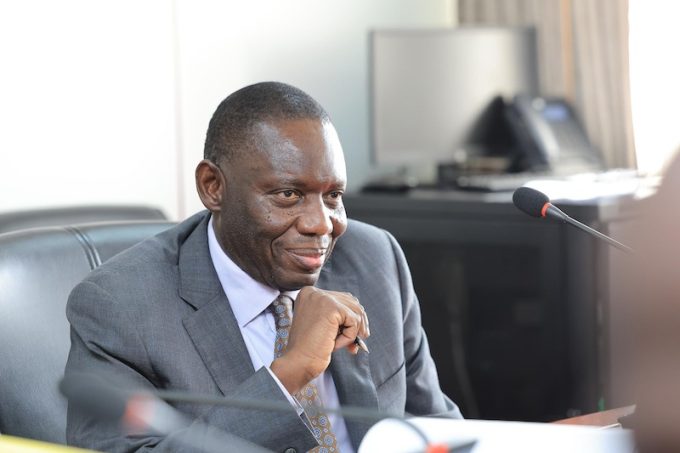

Finance Minister Henry Musasizi has challenged the Uganda Registration Services Bureau (URSB) to rethink business formalisation by making registration a gateway to economic opportunities rather than simply a legal requirement for enterprises.
Speaking as Chief Guest at the inaugural URSB Conference 2026 held at the Uganda Business Facilitation Centre in Kampala, Musasizi said businesses would be more willing to formalise if registration opened doors to financing, public procurement, commercial partnerships, technology and wider markets.
The conference brought together stakeholders to discuss how Uganda can strengthen its business environment and support enterprises to grow.
Musasizi argued that government agencies must demonstrate the practical value of formalisation to entrepreneurs, particularly small businesses that often struggle with the costs of operating in a formal economy.
“Businesses are more likely to formalise when the economic benefits outweigh the costs. Our approach must, therefore, make formalisation an attractive economic proposition rather than merely a regulatory obligation,” he said.
The Minister noted that businesses face several challenges that limit their growth, including high costs of capital, electricity and transport, alongside informality and inadequate irrigation facilities.
He said addressing these barriers requires a coordinated approach across government institutions, with business registration serving as a starting point for accessing economic opportunities.
Among his five strategic priorities was institutional integration, calling on URSB, the Uganda Revenue Authority (URA), Uganda Investment Authority (UIA), local governments and other regulatory agencies to establish interoperable systems that reduce duplication.
Musasizi said businesses should not be forced to repeatedly submit the same information to different government institutions when systems could be connected to simplify service delivery.
“We want a one-stop centre for all business registration services in the country,” he said.
He also called for a shift in how URSB measures its performance, arguing that the number of registered businesses alone should not determine the Bureau’s success.
Instead, he said, government should pay attention to whether registered businesses survive, grow, access capital, create jobs and contribute meaningfully to the economy.
The Minister commended URSB for its digital transformation and community outreach programmes, which have facilitated the formalisation of 17,990 entities between FY 2023/24 and FY 2025/26, alongside the deployment of 187 mobile business registration clinics.
Acting Registrar General Mustapher Ntale said URSB had moved from a largely manual registry to a digital institution, improving efficiency and the turnaround time for services.
“Since 2016, we have embarked on a digital journey, and all our services can be accessed online. The automation of our services has promoted efficiency and improved our turnaround time,” Ntale said.
Meanwhile, Minister of Justice and Constitutional Affairs Norbert Mao described URSB as an important component of Uganda’s economic infrastructure, citing its role in supporting businesses, protecting intellectual property and maintaining electronic business records.
“URSB is therefore not just a registry. It is a strategic pillar of Uganda’s economic infrastructure,” Mao said.
Mao encouraged young Ugandans to embrace entrepreneurship, noting that businesses play a critical role in creating employment and improving household welfare through incomes that support families, education and healthcare.
He also commended partnerships between URSB, government institutions and development partners in strengthening the country’s business environment.
The conference comes amid continued efforts to encourage businesses operating in Uganda’s informal economy to register and access opportunities within the formal business ecosystem, with government increasingly looking at formalisation as a tool for enterprise development, economic growth and job creation.
Uganda has invested over Shs 6 trillion in PDM, Emyooga, agricultural credit...
Bank of Uganda Governor Michael Atingi-Ego says Uganda’s projected $4–4.5 billion annual...
MTN Mobile Money is exploring partnerships to bring digital payments, merchant lending...
Uganda is exploring new development financing options through African capital markets, private...
Excepteur sint occaecat cupidatat non proident