
Home News Museveni Hails Uganda’s Growing Gold Refining Industry as 10 Licensed Refineries Add Local Value
News

Museveni Hails Uganda’s Growing Gold Refining Industry as 10 Licensed Refineries Add Local Value

Share
Share

Uganda’s gold refining industry is steadily growing, with the country now boasting 10 licensed gold refineries that process gold locally to a purity level of 99.9 percent. The development marks a major step in the government’s push to move away from exporting raw minerals and instead focus on local value addition.

President Yoweri Museveni recently highlighted the progress of the sector, saying Uganda is beginning to fully tap into the economic benefits of refining its own gold rather than sending it abroad in raw form.

According to the President, one of the licensed refiners, Feldstein Co. Ltd., based in Kampala, is refining gold to 99.9 percent purity. He revealed that the refinery is also expanding its footprint, with another facility under construction in Morulem, Abim District.

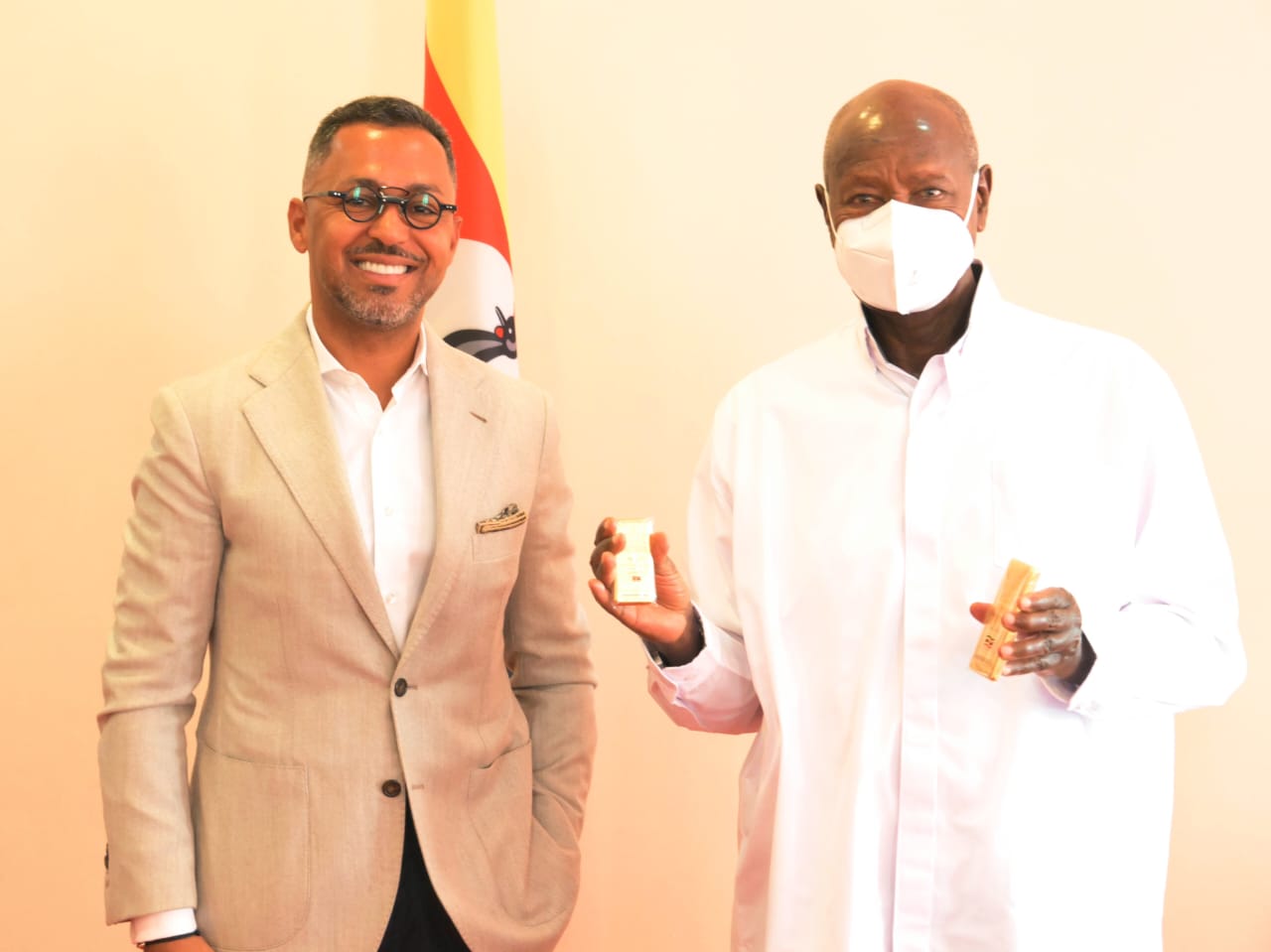
“In the picture, I am with Mr. Cohen Carlos, who owns Feldstein Co. Ltd., a gold refinery in Kampala. It refines Uganda’s gold to a purity level of 99.9%, which recently was earning USD 173,000 per kilogram. On account of the war in the Gulf of Persia, the price is now USD 129,000,” Museveni said.

The President added that the gold he was holding in the photo, weighing one and a half kilograms, came from Ibanda District. He used the moment to underscore what he described as a new chapter in Uganda’s mineral sector.

“This particular one and a half kilograms of gold that I am holding is from Ibanda. Mr. Cohen is building another refinery in Morulem, Abim. Uganda is waking up. We have 10 licensed gold refineries in Uganda,” Museveni said.

One of the most notable developments in the industry is that locally refined gold bars are now being branded with the official Bank of Uganda logo, a sign of growing formalisation and confidence in Uganda’s domestic gold value chain.

The progress comes as the government continues to encourage local refining and domestic processing of minerals as a way of creating jobs, retaining more value within the economy, and strengthening Uganda’s position in regional and international mineral trade.

However, the sector is also facing the realities of global market shifts. Museveni noted that international gold prices have recently fallen from about USD 173,000 per kilogram to USD 129,000 per kilogram, attributing the decline to ongoing conflict in the Gulf region.

Even with the price fluctuations, Uganda’s growing refining capacity signals a significant shift in the country’s mining and mineral economy. With more licensed refineries, new facilities under development, and increasing emphasis on domestic processing, the gold sector is emerging as one of the areas where Uganda is trying to move from raw extraction to industrial value addition.

For Uganda, the message from the latest developments is clear: the country wants to refine more of its minerals at home, keep more value within its borders, and build an industry that contributes more directly to national growth.

Museveni Hails Uganda’s Growing Gold Refining Industry as 10 Licensed Refineries Add Local Value

Uganda’s gold refining industry is steadily growing, with the country now boasting 10 licensed gold refineries that process gold locally to a purity level of 99.9 percent. The development marks a major step in the government’s push to move away from exporting raw minerals and instead focus on local value addition.

President Yoweri Museveni recently highlighted the progress of the sector, saying Uganda is beginning to fully tap into the economic benefits of refining its own gold rather than sending it abroad in raw form.

According to the President, one of the licensed refiners, Feldstein Co. Ltd., based in Kampala, is refining gold to 99.9 percent purity. He revealed that the refinery is also expanding its footprint, with another facility under construction in Morulem, Abim District.

“In the picture, I am with Mr. Cohen Carlos, who owns Feldstein Co. Ltd., a gold refinery in Kampala. It refines Uganda’s gold to a purity level of 99.9%, which recently was earning USD 173,000 per kilogram. On account of the war in the Gulf of Persia, the price is now USD 129,000,” Museveni said.

The President added that the gold he was holding in the photo, weighing one and a half kilograms, came from Ibanda District. He used the moment to underscore what he described as a new chapter in Uganda’s mineral sector.

“This particular one and a half kilograms of gold that I am holding is from Ibanda. Mr. Cohen is building another refinery in Morulem, Abim. Uganda is waking up. We have 10 licensed gold refineries in Uganda,” Museveni said.

One of the most notable developments in the industry is that locally refined gold bars are now being branded with the official Bank of Uganda logo, a sign of growing formalisation and confidence in Uganda’s domestic gold value chain.

The progress comes as the government continues to encourage local refining and domestic processing of minerals as a way of creating jobs, retaining more value within the economy, and strengthening Uganda’s position in regional and international mineral trade.

However, the sector is also facing the realities of global market shifts. Museveni noted that international gold prices have recently fallen from about USD 173,000 per kilogram to USD 129,000 per kilogram, attributing the decline to ongoing conflict in the Gulf region.

Even with the price fluctuations, Uganda’s growing refining capacity signals a significant shift in the country’s mining and mineral economy. With more licensed refineries, new facilities under development, and increasing emphasis on domestic processing, the gold sector is emerging as one of the areas where Uganda is trying to move from raw extraction to industrial value addition.

For Uganda, the message from the latest developments is clear: the country wants to refine more of its minerals at home, keep more value within its borders, and build an industry that contributes more directly to national growth.

Share
Related Articles
FinanceNews

MOFPED, URA set ambitious target to raise Uganda’s tax-to-GDP ratio to 20% by 2029/30

Uganda’s Ministry of Finance and URA align on an ambitious strategy to...

BusinessNewsTechnology & Innovation

Uganda Grants Starlink License in Move Set to Shake Up Telecom Market

Uganda grants Starlink an operating licence, opening the door for satellite broadband...

FinanceNews

Ministry of Finance Launches New World Bank Group Partnership Framework to Support Uganda’s Growth Agenda

The Ministry of Finance launched a 10-year Country Partnership Framework with the...

LeadershipNews

Centenary Bank’s Beatrice Lugalambi Installed as 39th President of Rotary Club of Muyenga

Excerpt: Beatrice Lugalambi has been installed as the 39th President of the...