
Home Leadership Dr. Apollo Buregyeya: Engineering Africa’s Industrial Future Through Value Addition and Sustainable Development.
LeadershipSustainability

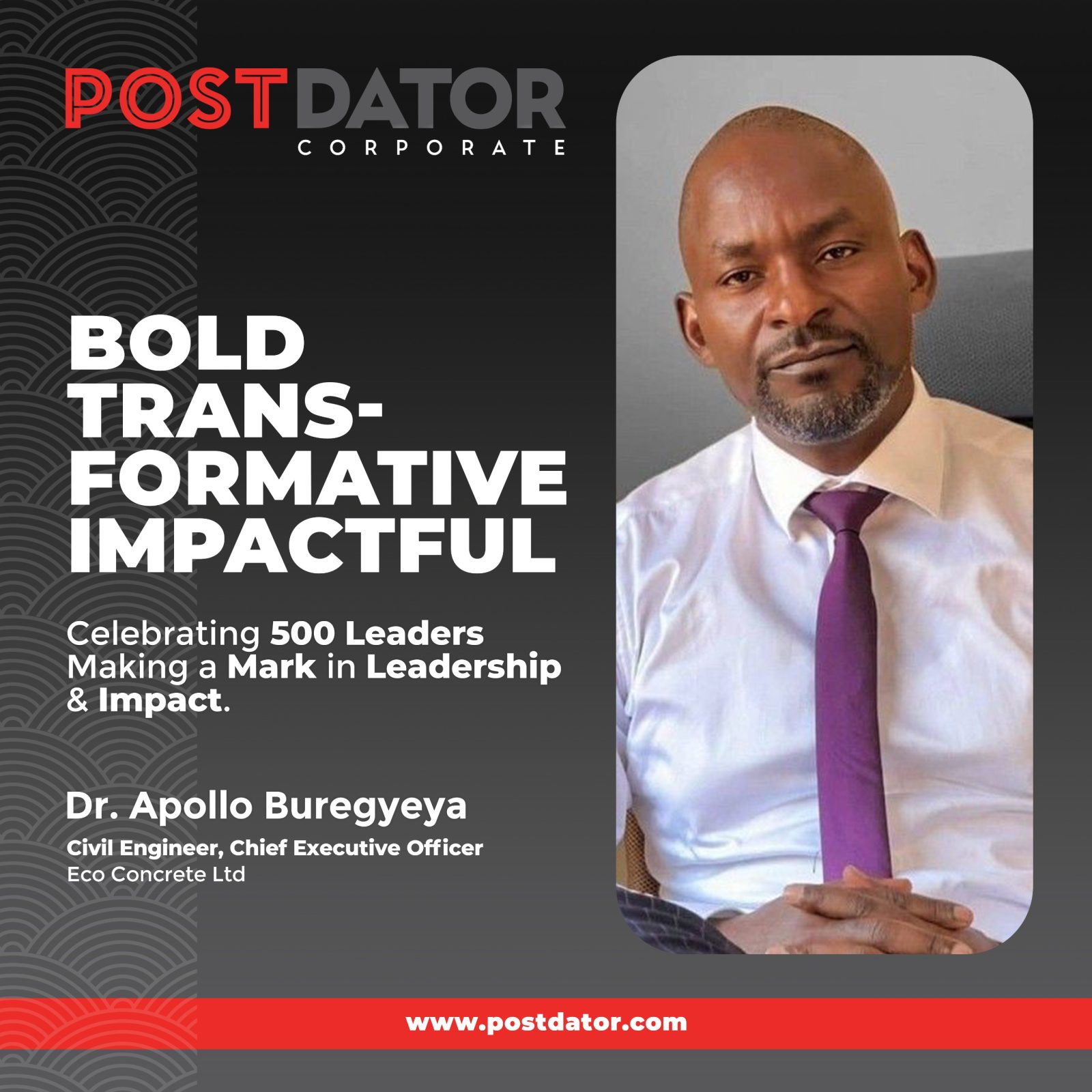
Dr. Apollo Buregyeya: Engineering Africa’s Industrial Future Through Value Addition and Sustainable Development.

Share
Share

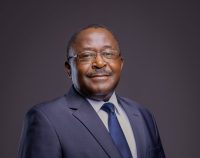
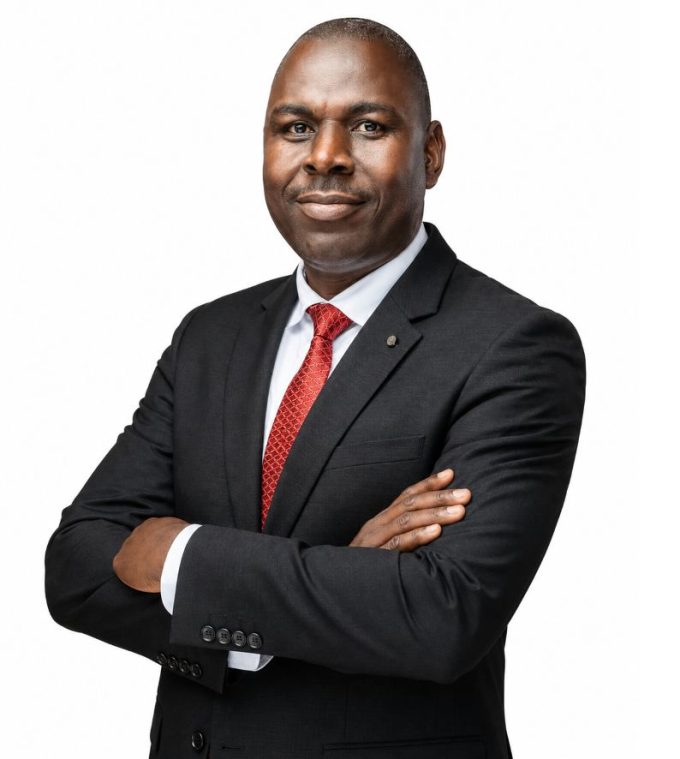
Across Africa, conversations about development often focus on infrastructure, natural resources, education and industrialisation as though they are separate agendas. Dr Apollo Buregyeya has spent his career arguing and demonstrating that they are different parts of the same system. A civil engineer by training, an academic by profession, an entrepreneur by practice and an author by conviction, he has consistently pursued one central idea: Africa’s long-term prosperity will not come merely from owning abundant natural resources, but from building the knowledge, industries, technologies and institutions that transform those resources into high-value products and globally competitive enterprises.

Whether working with cement, concrete, gemstones or engineering education, his mission remains remarkably consistent: to move Africa higher up the value chain. Rather than viewing engineering as the design of isolated structures, he sees it as the design of productive systems that create wealth, develop skills and expand national capability. This philosophy has shaped every stage of his professional journey.

Building Better Infrastructure

Dr. Buregyeya’s professional career began in civil engineering, where he developed a deep interest in construction materials, concrete technology and infrastructure durability. After graduating from Makerere University, he pursued doctoral studies in Civil Engineering Materials at the University of the Witwatersrand in South Africa, strengthening his expertise in sustainable construction and material performance. His academic journey reinforced a conviction that engineering should not simply solve technical problems but should also serve as an instrument for economic transformation.

Today, as a lecturer in the Department of Civil and Environmental Engineering at Makerere University, he teaches future engineers while conducting research in construction materials, concrete durability, infrastructure maintenance, sustainable construction and low-carbon building technologies. His teaching philosophy extends beyond transferring technical knowledge. He believes universities should produce graduates who build industries, create technologies and strengthen national productive capacity rather than merely filling existing jobs.

Eco Concrete: Engineering Local Solutions

That philosophy found practical expression in Eco Concrete Limited, a company established to develop affordable, durable and environmentally responsible construction solutions tailored to African realities. The company was founded on the belief that Africa’s construction challenges deserve African engineering innovations, drawing on local materials, local knowledge and modern quality systems to produce infrastructure that is both economically and environmentally sustainable.

Under Dr. Buregyeya’s leadership, Eco Concrete has advanced innovative construction materials, digital construction management systems and quality assurance approaches that improve efficiency, transparency and affordability within the construction sector. His broader vision extends beyond supplying building materials. He sees infrastructure as a platform for industrial development, arguing that roads, buildings and housing projects should strengthen domestic manufacturing, engineering capacity and local supply chains instead of merely consuming national budgets.

From Construction Materials to Mineral Value Addition

While involved in mineral exploration activities connected to his wider development interests, Dr. Buregyeya encountered another question that would reshape his entrepreneurial direction. Africa exports enormous quantities of valuable minerals, yet much of the economic value is captured elsewhere through cutting, polishing, certification, branding, jewellery manufacturing and international marketing. The challenge, he concluded, was not geological. It was industrial.

Determined to understand the sector from the inside, he travelled to Sri Lanka, one of the world’s leading gemstone centres, to undertake professional training in gemology. There he acquired practical expertise in gemstone identification, cutting, polishing, grading and valuation. The experience reinforced the same lesson he had learned in engineering: natural resources create opportunity, but knowledge is what creates value.

ASILI GEMS: Building Africa’s Luxury Industry.

An ASILI watch designed to be a package for Ugandan minerals

This insight led to the establishment of ASILI GEMS Ltd, a company created to help transform Uganda’s gemstone sector from one centred on raw mineral exports into one built on value addition, skills development and international competitiveness. Rather than focusing solely on gemstone trading, ASILI GEMS invests in gemstone cutting, polishing, certification, lapidary training and luxury product development while promoting internationally recognised standards and local technical expertise.

The company’s ambition reaches beyond gemstones themselves. Dr Buregyeya envisions an African luxury ecosystem founded on craftsmanship, authenticity, traceability, design excellence and globally recognised quality. For him, mineral value addition is not simply about refining raw materials. It also encompasses certification, standards, branding, intellectual property, design capability, market access and ownership of the commercial systems through which value is created and exchanged.

Ideas That Connect Industries.

Beyond his businesses, Dr. Buregyeya has become a respected public voice on infrastructure, industrialisation and economic transformation. Through books including The Big We, Decolonising Africa’s Infrastructure, The Wisdom Degree and his forthcoming work The Five Levels of Economic Power, he argues that sustainable development requires countries to progress beyond resource ownership towards productive control, technological capability, market influence and institutional sovereignty.

These ideas increasingly shape his contributions to public policy discussions on construction, mining, manufacturing and industrial development. Although these sectors may appear unrelated at first glance, they are connected by a common question that has come to define his work: how can Africa retain a greater share of the value created from its own resources? His answer consistently points towards education, industrial capability, innovation and strong institutions as the foundations of long-term prosperity.

Investing in People.

Throughout his career, Dr Buregyeya has maintained that people, not minerals, cement or financial capital, remain Africa’s greatest resource. His work, therefore, places significant emphasis on engineering education, professional mentorship, technical skills development and institution building. Whether supervising engineering students, mentoring young entrepreneurs, supporting local contractors or establishing gemstone training programmes, he sees human capability as the foundation upon which every successful industry is built.

This commitment reflects his broader belief that sustainable development cannot be imported. Technologies may be acquired, equipment may be purchased, and capital may be borrowed, but the knowledge required to sustain industrial growth must ultimately be developed within the country itself. Building that knowledge ecosystem has become one of the defining objectives of his career.

Leadership Through Systems.

Dr Apollo Buregyeya’s impact is measured not only by the companies he has founded or the research he has produced, but also by the systems he seeks to build. His work consistently demonstrates that leadership is about creating institutions, developing industries and equipping others to participate meaningfully in economic transformation. Across engineering, education, construction materials, gemstone value addition and industrial policy, he has pursued a single objective: enabling Africa to capture greater value from its own resources through knowledge, innovation and enterprise.

As Africa seeks new models for sustainable and inclusive development, Dr. Buregyeya’s work offers a practical demonstration that lasting prosperity begins long before a product reaches the market. It begins with ideas, is strengthened through education, is realised through industry and ultimately depends on institutions capable of transforming natural resources into enduring national wealth. His career reflects an unwavering commitment to that vision and to the belief that Africa’s future will be built not simply by extracting what lies beneath its soil, but by mastering the knowledge and industries that unlock its full value.

Share
Related Articles
LeadershipNews

Centenary Bank’s Beatrice Lugalambi Installed as 39th President of Rotary Club of Muyenga

Excerpt: Beatrice Lugalambi has been installed as the 39th President of the...

Leadership

JBS Uganda: Doing Business God’s Way

Joseph Business School® Uganda trains entrepreneurs to do business God’s way building...

Christine Musisi
Leadership

Christine Musisi: Raising Transformational Leaders for Africa

For over three decades, Christine Musisi has worked at the highest levels...

NewsSustainability

Centenary Bank Donates 30 Waste Bins to Makerere University to Improve Campus Cleanliness

Centenary Bank donated 30 waste bins to Makerere University in a handover...