

BusinessNews
 Corporate editorUpdated 2 months Ago2 Mins read184
URA Expands EFRIS Requirement to More Business Sectors
Corporate editorUpdated 2 months Ago2 Mins read184

Share
- accommodation and food services
- BRN
- business taxation
- construction
- digital tax administration
- EFRIS
- EFRIS requirements Uganda
- electronic invoicing Uganda
- electronic receipts
- income tax deductions
- information technology
- Manufacturing
- NIN
- professional services
- real estate
- small businesses Uganda
- tax compliance Uganda
- TIN
- transportation
- Uganda Revenue Authority
- Uganda tax administration
- URA
- VAT-registered taxpayers
- wholesale and retail fuel







Related Articles
FinanceNews Corporate editor2 Mins read
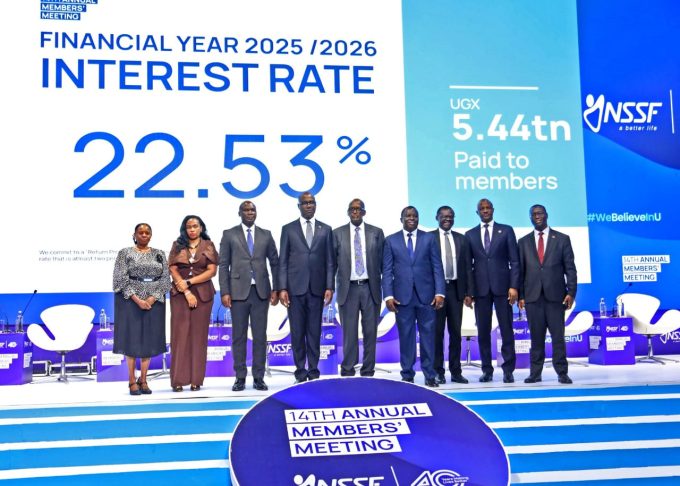
NSSF Declares Record 22.53% Interest Rate, Crediting Sh5.44 Trillion to Savers
NSSF has declared a record 22.53% interest rate for FY2025/26, crediting Sh5.44...
Corporate editor2 Mins read

FinanceNews Corporate editor2 Mins read
Bank of Uganda Challenges Banks to Turn Uganda’s $500 Billion Growth Ambition Into Action
Bank of Uganda Governor Michael Atingi-Ego has urged banks to develop measurable...
Corporate editor2 Mins read

News Corporate editor2 Mins read
NSSF assets hit UGX32.8 trillion as Fund reports strong FY2025/26 performance
NSSF assets rose to UGX32.8 trillion in FY2025/26, while income, member contributions...
Corporate editor2 Mins read

Business Corporate editor2 Mins read
Equity Bank Drives Uganda-Rwanda Trade and Investment Push as Roadshow Opens
Equity Bank has opened the 2026 Uganda-Rwanda Trade and Investment Roadshow to...
Corporate editor2 Mins read