
Home Leadership From Ledgers to Wallets: The Evolution of Fintech and Its Role in Uganda’s Financial Sector Growth
LeadershipLeadership Journal

From Ledgers to Wallets: The Evolution of Fintech and Its Role in Uganda’s Financial Sector Growth

Share
Share

By Dr Grace Stuart Ndyareeba

When I think about how Ugandans access financial services today, I am reminded of how far we have come and how quickly. Not long ago, a farmer from my village in Ndago, Rukungiri district, had almost no practical way to save, borrow, insure, or move money without travelling to a bank branch that might be hours away. Today, that same farmer can receive payment for produce, pay school fees, or save a small amount for the future, all from a basic mobile handset. That shift did not happen by accident. It is the result of years of deliberate work by innovators, regulators, and an industry that has matured from a handful of scrappy experiments into a structured, regulated ecosystem that now touches nearly every Ugandan household.

I have had the privilege of watching and helping to shape this journey from both sides of the table. For over three decades, I served at the Bank of Uganda, where I supervised financial institutions and participated in the building of the regulatory framework that keeps our financial system safe. Today, as Managing Director and CEO of MicroPay (U) Ltd, and as a founder member and former Chairman of the Payment Services Providers Association (PSPA), I sit on the other side, building and having helped represent the very industry I once supervised. That vantage point has given me a deep appreciation for how the fintech sector in Uganda got here, and where it is headed.

A Cash Economy Learns to Go Digital

Uganda’s fintech story really begins with mobile money. When mobile money was first introduced in the country in the late 2000s, it was a novelty, a way to send airtime or a small amount of cash to a relative in another town. Few people imagined it would become the backbone of Uganda’s digital economy. But it did. Within a few years, mobile money moved from being a convenience for the urban middle class to becoming the primary financial tool for millions of Ugandans who had never held a bank account.

For a long time, however, this fast-growing sector operated without a dedicated legal framework of its own. Payment services were guided largely by administrative guidelines rather than comprehensive law, which created uncertainty for both providers and the customers who trusted them with their money. That changed with the enactment of the National Payment Systems Act in 2020. Passed by Parliament in May 2020, the Act was prompted by the rapid growth in digital and electronic financial services and the absence of a comprehensive law to regulate and supervise the providers offering them. The Bank of Uganda began issuing licenses under this new law in 2021, formally bringing payment service providers, payment system operators, and issuers of payment instruments under direct central bank oversight for the first time.

I am proud that MicroPay was among the earliest companies to be licensed under this new regime, the third company to receive a license, after the mobile network operators MTN and Airtel. That licensing moment mattered enormously, not just for MicroPay, but for the credibility of the entire industry. It signalled that fintech in Uganda was no longer an unregulated frontier; it was now a formal, supervised part of the national financial system, subject to the same discipline around capital adequacy, consumer protection, and operational resilience that applies to banks.

Two Associations, One Ecosystem

As the industry has grown, it has organised itself around two associations that, together, represent nearly every fintech company operating in Uganda today.

The Payment Services Providers Association (PSPA), which I had the privilege of chairing, brings together the licensed and regulated fintech companies, payment service providers and payment system operators that hold direct licenses from the Bank of Uganda. There are currently around 52 such companies. PSPA exists to give this regulated community a collective voice: it engages regulators on policy questions, advocates for changes to laws that affect how member companies operate, and creates a forum where licensed operators can compare notes on the practical realities of running a compliant payments business in Uganda.

Alongside PSPA sits the Financial Technology Service Providers Association of Uganda (FITSPA), which represents the broader, largely non-regulated fintech community: the innovators, start-ups, and technology-driven financial service providers that may not yet hold a direct Bank of Uganda license but are nonetheless shaping how Ugandans access financial tools. Between the two associations, the industry has a structure that captures both the regulated core of the sector and the wider innovation ecosystem feeding into it.

One of the most valuable things PSPA does is create space for member companies to learn from one another. The association holds regular meetings where members discuss typologies, for instance, how a member company was affected by a particular type of fraud, and what worked, or did not work, in responding to it. In an industry where bad actors are constantly evolving their tactics, this kind of shared intelligence is often more valuable than any single company’s internal controls. No one institution sees the whole picture, but collectively, the industry sees a great deal more.

PSPA has also built a formal partnership with the Uganda Bankers’ Association. This relationship allows member companies to engage the banking sector as an organised industry rather than as individual companies negotiating alone. Fintechs and banks are increasingly interdependent; payment providers rely on banks for settlement and trust accounts, and banks increasingly rely on fintechs for last-mile reach and innovation. An institutional relationship between the two associations means these conversations happen at the industry level, which produces more consistent and durable outcomes than one-off deals between individual firms.

That collective approach was tested more recently when the industry came together to engage Parliament during deliberations on the Protection of Sovereignty Bill. Working through PSPA and FITSPA, the sector made the case to lawmakers that the fintech and payments industry should be treated distinctly, given how directly its provisions could touch the everyday financial transactions of ordinary Ugandans. It was a reminder that advocacy is not only about shaping new rules for our own sector, but also about ensuring that legislation designed for other purposes does not inadvertently disrupt a payments system that millions of Ugandans now depend on daily.

The Bank of Uganda's Role in Building Trust

None of this growth would have been possible without the Bank of Uganda’s steady hand. Beyond licensing and supervision, the central bank plays an active role in public education, helping ordinary Ugandans understand which fintech providers are properly licensed and which are not, an important safeguard in a market where trust is everything. The Bank of Uganda’s website is, in fact, one of the best public resources available for anyone who wants to understand what licensed fintechs in Uganda actually do: it publishes the list of licensed payment service providers and payment system operators, along with the services each is authorised to offer. I would encourage any Ugandan doing business with a fintech company, or any potential partner or investor, to check that list first.

This regulatory scaffolding licensing, supervision, public disclosure, and a functioning industry association structure is precisely what has allowed fintech in Uganda to scale responsibly rather than recklessly. Regulation is sometimes seen as an obstacle to innovation. In my experience, on both sides of the regulatory relationship, the opposite is closer to the truth: sound regulation is what allows an industry to earn the public trust it needs to grow.

What This Means for Ordinary Ugandans

The most meaningful measure of this industry’s progress is not the number of licenses issued or the volume of transactions processed, though both have grown enormously. It is the change in what is possible for an ordinary Ugandan. A person in a remote village who once had no realistic way to access formal financial services can now receive a government social protection payment directly to a mobile wallet, pay a trader for goods without handling cash, or build a savings history that could one day support a loan. At MicroPay, our work powering agency banking infrastructure and disbursement systems for social protection programs has shown me firsthand what this looks like at scale: reliable, secure, high-volume payments reaching people who were, until recently, entirely outside the formal financial system.

It is also worth noting that this is not simply an industry built on imported technology and rebranded elsewhere. A significant portion of the payment infrastructure now running Uganda’s financial transactions was built here, by Ugandan technologists, and is maintained here. That matters for cost, for responsiveness to local needs, and for the resilience of our financial system. It means the people who understand a problem best are also the people building the solution to it.

Looking Ahead

Uganda’s fintech industry has moved through several distinct phases in a relatively short period: an unregulated era of experimentation, a foundational period of legislation and licensing, and now a maturing phase defined by industry self-organisation, deeper bank–fintech collaboration, and active engagement in public policy. Each phase has expanded what financial inclusion and financial widening actually mean in practice.

I do not think this evolution is finished. As the regulated fintech community continues to grow beyond its current 52 licensed players, and as FITSPA continues to nurture the next generation of innovators outside that regulatory perimeter, I expect the boundary between “bank” and “fintech” in Uganda to continue blurring in useful ways. What will not change, I hope, is the discipline that has gotten us this far: that innovation in financial services must be anchored in governance, that trust is earned through transparency, and that the ultimate test of any payment system is whether it reaches the person who needs it most — including the one in the village who, not long ago, had no access at all.

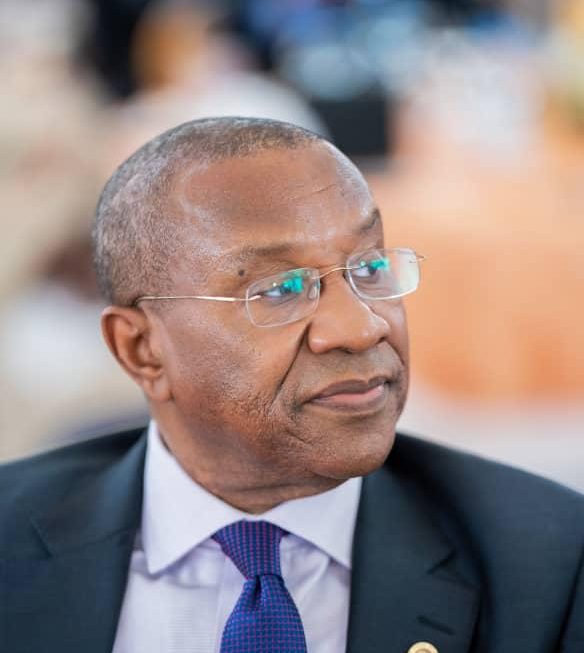
Dr Grace Stuart Ndyareeba is Managing Director and CEO of MicroPay (U) Ltd, and a founding member and former Chairman of the Payment Services Providers Association (PSPA). He previously served for more than 30 years at the Bank of Uganda, including as Deputy Director in charge of on-site examinations of financial institutions.

Share
Related Articles
Leadership

Catherine Aneno: Building Stronger Unions, Advancing Workers’ Rights, and Shaping the Future of Labour in East Africa

Catherine Aneno, IndustriALL coordinator, champions workers' rights and women's leadership across East...

Apollo Buregyeya ASILI GEMS watch
LeadershipSustainability

Dr. Apollo Buregyeya: Engineering Africa’s Industrial Future Through Value Addition and Sustainable Development.

Dr. Apollo Buregyeya, a civil engineer, academic, entrepreneur and author, is driving...

LeadershipNews

Centenary Bank’s Beatrice Lugalambi Installed as 39th President of Rotary Club of Muyenga

Excerpt: Beatrice Lugalambi has been installed as the 39th President of the...

Leadership

JBS Uganda: Doing Business God’s Way

Joseph Business School® Uganda trains entrepreneurs to do business God’s way building...