
Home Business Atingi-Ego: Uganda’s Oil Revenues Could Generate $4.5 Billion Annually, Fund Tenfold Growth Strategy
BusinessFinance

Atingi-Ego: Uganda’s Oil Revenues Could Generate $4.5 Billion Annually, Fund Tenfold Growth Strategy

Share
Share

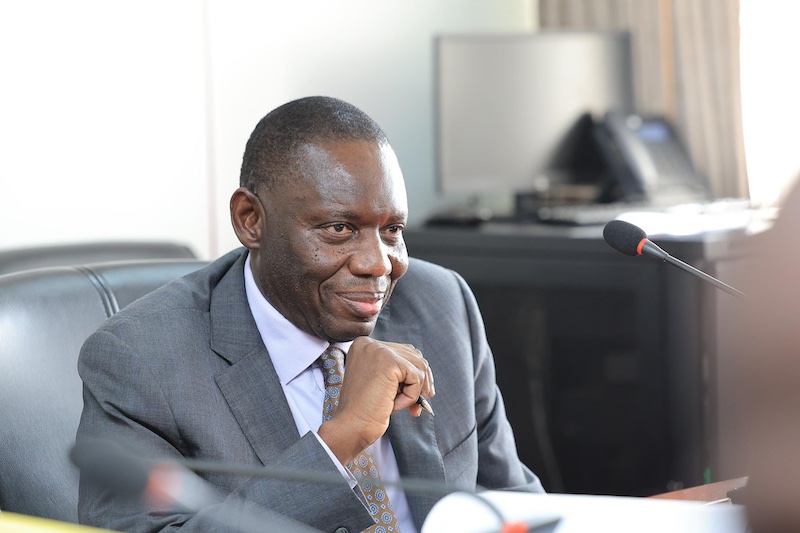
Bank of Uganda Governor Michael Atingi-Ego has highlighted the potential of Uganda’s anticipated oil revenues to transform the economy, saying projected annual earnings of between $4 billion and $4.5 billion could provide significant financial relief and support the country’s Tenfold Growth Strategy.

Speaking while presenting the Bank of Uganda Monetary Policy Statement in November 2026, Atingi-Ego said the expected oil revenues present an important opportunity, but stressed that how the money is utilised will determine its long-term economic value.

“If that oil production can come on board immediately, we anticipate about four billion dollars, four to four point five billion dollars per annum, and that can really provide a good relief,” he said.

However, he cautioned that the country must look beyond the immediate financial gains and channel the proceeds into productive sectors capable of expanding Uganda’s economic capacity.

“But importantly, what we use the four billion dollars for is also critical. We should use it, as I said earlier on, to support the Tenfold Growth Strategy,” he added.

Atingi-Ego identified industrialisation, tourism development and mineral development among the priority areas through which Uganda can strengthen value addition, increase productivity and earn more from its exports.

According to the Governor, moving away from exporting largely unprocessed products towards value-added goods would enable the country to generate higher foreign exchange earnings from every unit of production.

“All these go to adding value… adding value to our produce in the country, and therefore for every unit we’ll earn more dollars per unit than we’re earning right now,” he explained.

He further argued that improving productivity across the economy would strengthen Uganda’s position in international markets while reducing its exposure to external economic shocks.

STI key to improving Uganda’s competitiveness

The Governor also called for greater investment in Science, Technology and Innovation (STI), describing productivity improvements as essential to addressing structural weaknesses in the economy.

Reflecting on the pressures experienced by the economy, he said Uganda must address its vulnerabilities by embracing science, technology and innovation across different sectors.

“So really, this experience has told us that we need to wake up and address the vulnerabilities in our economy. We need to pursue science, technology and innovation very seriously as part of productivity enhancements to the entire economy,” Atingi-Ego said.

He warned that countries with low productivity face difficulties competing internationally, particularly in an increasingly competitive global trading environment.

“Because a country that has low productivity cannot compete in the international markets now,” he added.

Stronger exports needed for long-term currency stability

Atingi-Ego also addressed Uganda’s currency pressures, explaining that the Bank of Uganda can intervene to support short-term stability, but lasting currency strength depends on the underlying performance of the economy.

He cautioned against placing the responsibility for stabilising the shilling entirely on the central bank, arguing that sustainable currency stability requires stronger export earnings and an improved current account position.

“People should not look at the central bank as the institution that can fix the currency. No. We can only try to stabilise the currency in the short term, but long-term stability of the currency depends on how strong our current account balance is,” he said.

He explained that while monetary policy measures help manage demand-side pressures, Uganda must also strengthen its capacity to produce and export goods and services.

“We need to address this thing from the supply side rather than from the demand side. The central bank is managing it from the demand side, and over the long run it is not sustainable. It is the supply side that’s going to stabilise this currency,” he emphasised.

His remarks place emphasis on the importance of translating anticipated oil earnings into productive investments, stronger domestic industries and higher export capacity.

The broader economic objective, according to the Governor, is not simply to earn more foreign currency from oil, but to build an economy capable of generating sustainable foreign exchange through value addition, innovation and increased productivity.

Share
Related Articles
BusinessFinance

Government Pours Shs 6 Trillion into Wealth Creation as Uganda Moves to Strengthen Financial Inclusion

Uganda has invested over Shs 6 trillion in PDM, Emyooga, agricultural credit...

BusinessNews

MTN Mobile Money Eyes Partnerships to Digitise Uganda’s Industrial Parks

MTN Mobile Money is exploring partnerships to bring digital payments, merchant lending...

Uganda Explores New Development Financing Opportunities at Africa Financial Summit in Angola
BusinessFinance

Uganda Explores New Development Financing Opportunities at Africa Financial Summit in Angola

Uganda is exploring new development financing options through African capital markets, private...

Business

Uganda, Germany Seek Stronger Trade and Investment Ties to Drive Economic Transformation

Uganda and Germany are deepening cooperation on investment, technology transfer, trade and...