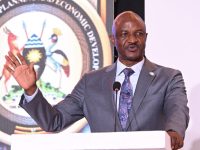

Uganda and Germany are seeking to deepen their economic partnership, with increased investment, technology transfer and private-sector participation taking centre stage in discussions aimed at accelerating Uganda’s economic transformation.
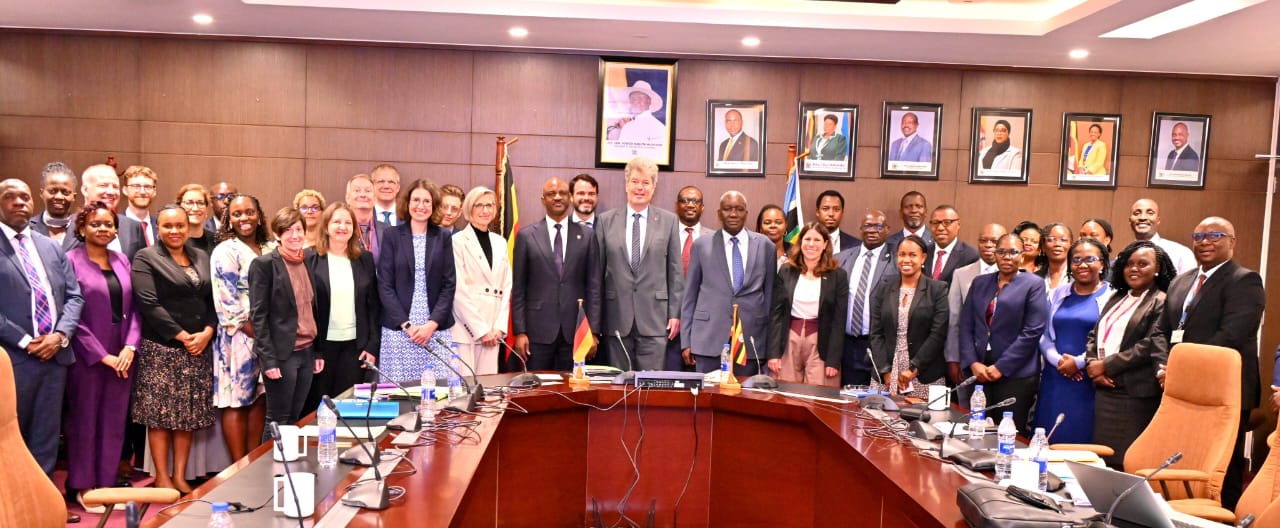
The two countries reaffirmed their commitment to strengthening bilateral cooperation during the Uganda–Germany Government-to-Government Negotiations, held in Uganda on Monday, November 2, 2026.
Opening the negotiations, Permanent Secretary and Secretary to the Treasury (PSST) Dr Ramathan Ggoobi called for stronger economic ties aligned with Uganda’s Fourth National Development Plan (NDP IV) and the Tenfold Growth Strategy, which seeks to grow the country’s economy to US$500 billion by 2040.
Ggoobi said Germany’s investment, technology and industrial expertise could play an important role in supporting Uganda’s ambitions, particularly in agro-industrialisation, tourism, mineral development, and science, technology and innovation.
He emphasised that the partnership should translate into tangible economic benefits through increased production, value addition, exports, job creation and improved household incomes.
“We need to move beyond cooperation and ensure that our partnership delivers measurable results for the economy and the people of Uganda,” was the central message of the PSST’s remarks. Among the areas highlighted were water security, electricity access, climate-resilient agriculture and local economic development.
Ggoobi welcomed Germany’s proposed support for the River Enyau water investment, improved electricity access in West Nile and the SCALE programme targeting local economic development in Northern Uganda. These interventions are expected to support productive activity, strengthen local economies and improve access to essential infrastructure.
The discussions also highlighted opportunities for greater private-sector involvement, particularly in mobilising investment and strengthening trade and technology partnerships. Head of the German delegation, Joachim Schmitt, who also heads the Central and East Africa Division at Germany’s Federal Ministry for Economic Cooperation and Development, reaffirmed Berlin’s commitment to supporting Uganda’s development priorities.
Schmitt emphasised that mutual accountability, measurable development outcomes and stronger participation of private businesses should guide future cooperation. He noted that good governance, transparency, accountability, respect for human rights and a predictable investment environment were essential in attracting investment and ensuring sustainable economic growth.
Germany also reaffirmed its engagement in climate resilience, regional health security and sustainable development, including the construction of six valley tanks in Karamoja. On the humanitarian front, Schmitt commended Uganda’s refugee-hosting policy and its contribution to regional stability, while acknowledging the growing pressure on resources.
Ggoobi called for more predictable international financing and equitable burden-sharing, noting that Uganda was hosting approximately 2.05 million refugees and asylum-seekers as of September 2026.
Beyond development assistance, the negotiations point to a broader opportunity to strengthen Uganda–Germany commercial relations through trade, technology exchange, industrial investment and private capital mobilisation.
Both delegations agreed on the need to accelerate the implementation of existing commitments, strengthen regional cooperation and ensure that available development resources deliver meaningful outcomes.
The renewed engagement comes as Uganda seeks to attract investment, expand productive capacity and build stronger value chains under its long-term economic transformation agenda.
For Uganda, the challenge will be translating bilateral commitments into bankable projects, increased private investment and commercial opportunities that create jobs and expand the country’s export base.
Uganda is exploring new development financing options through African capital markets, private...
CoolBricks uses local soils and agricultural waste to create affordable, low-carbon bricks...
Housing Finance Bank is bringing banking and housing finance solutions closer to...
IMF and World Bank meetings in Bangkok ended with calls for stronger...
Excepteur sint occaecat cupidatat non proident