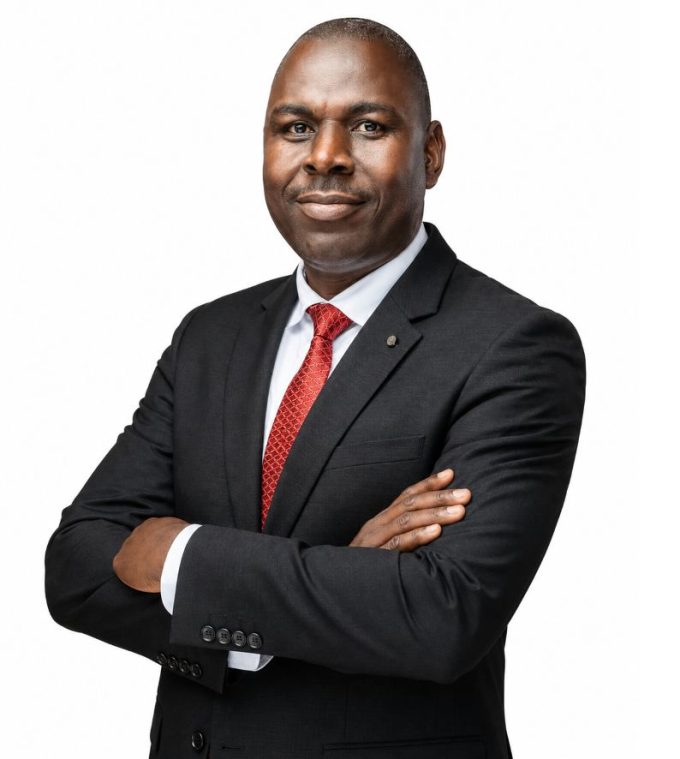

Home Leadership Catherine Aneno: Building Stronger Unions, Advancing Workers’ Rights, and Shaping the Future of Labour in East Africa
Leadership

Catherine Aneno: Building Stronger Unions, Advancing Workers’ Rights, and Shaping the Future of Labour in East Africa

Share
Share

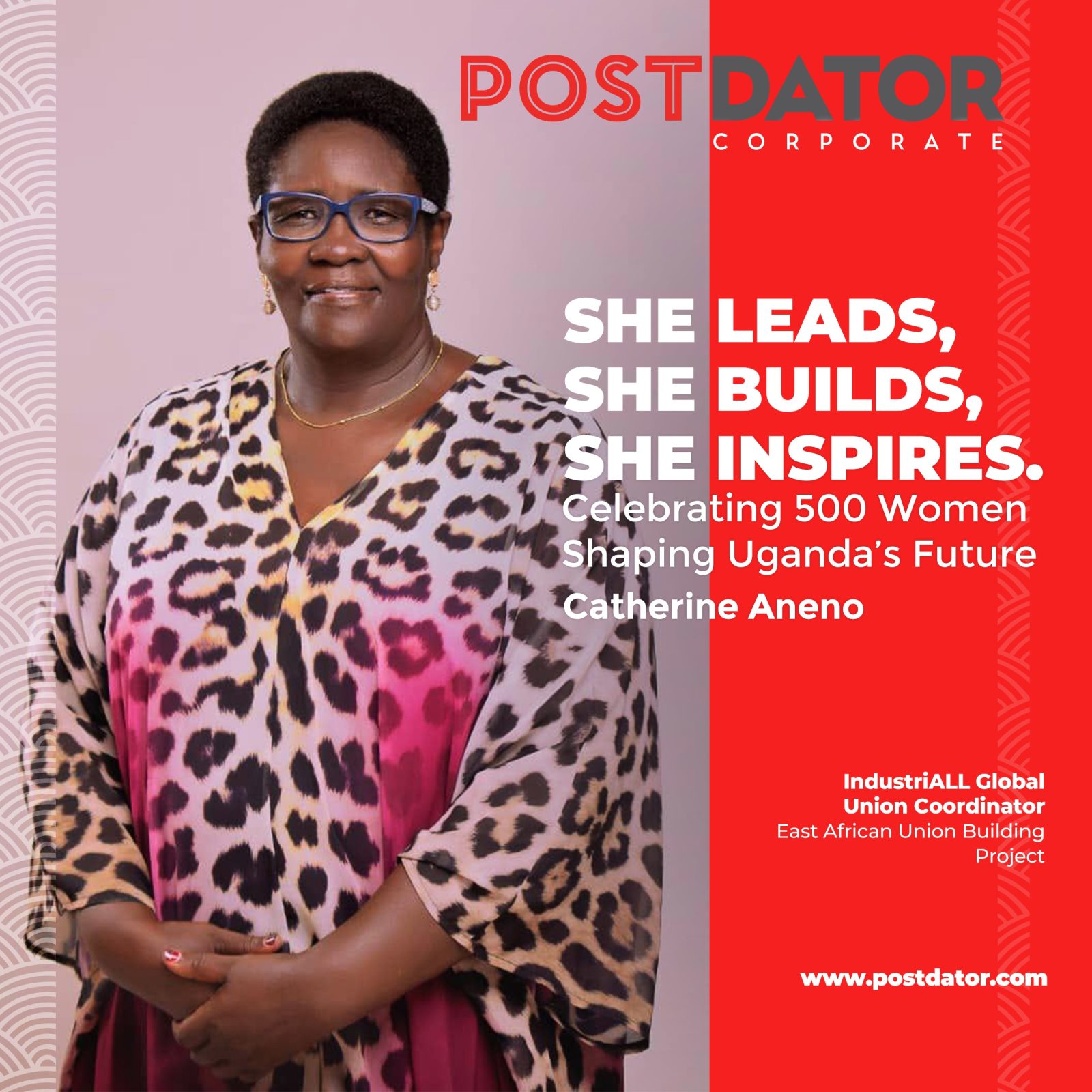
Economic growth is often measured in billions of shillings, new factories, and jobs created. But Catherine Aneno measures it differently: in the dignity of a worker who returns home safely, the mother who receives fair maternity leave, and the young woman who finally has a seat at the bargaining table. Yet behind every productive factory, thriving enterprise, and expanding economy are workers whose contributions make development possible. Ensuring that these workers are treated with dignity, protected by fair labour standards, and empowered to contribute meaningfully to national progress requires visionary leadership. Across Uganda and the wider East African region, Catherine Aneno has emerged as one of those leaders.

A respected labour rights advocate, trade union strategist, and champion of social justice, Catherine Aneno has devoted her career to advancing decent work, strengthening trade unions, and promoting inclusive labour policies. Her journey, however, did not begin in boardrooms or regional leadership forums; it began on the factory floor. As a factory worker, she witnessed firsthand the challenges facing workers who often had no one to speak for them. From unsafe working conditions and unequal treatment to limited representation, these experiences ignited her passion for workers’ rights and inspired a lifelong commitment to ensuring that every worker is treated with dignity, fairness, and respect. Her leadership reflects a deep conviction that sustainable economic development cannot be achieved unless workers’ rights are protected and their voices are represented in shaping the future of work.

Today, she serves as IndustriALL Global Union Coordinator for the East African Union Building Project, providing strategic leadership to affiliated trade unions across East Africa. In this role, she supports efforts to build stronger, more representative labour organisations capable of responding to the opportunities and challenges of a rapidly changing economic landscape. Her work spans organisational development, leadership training, gender equality, youth participation, social dialogue, and cross-border collaboration among unions, placing her at the forefront of efforts to strengthen workers’ representation in one of Africa’s fastest-growing regions.

Her appointment to this regional position is the culmination of years of dedicated service within Uganda’s labour movement, where she earned respect as a principled advocate for workers in the textile, garment, leather, and manufacturing sectors. Through determined engagement with employers, government institutions, and workers themselves, she helped champion safer workplaces, fair labour practices, collective bargaining, and stronger protections for employees, particularly women and young workers who often face the greatest barriers to decent employment.

A Career Dedicated to Decent Work

Catherine Aneno’s professional journey is a remarkable story of resilience, courage, and servant leadership. Having begun her career as a factory worker, she experienced firsthand the realities of workers whose concerns often went unheard. Rather than remain a silent observer, she chose to become their voice.

Her commitment to improving the lives of workers led her into the trade union movement, where she underwent extensive training in various fields of trade unionism and labour relations. She steadily rose through the ranks, serving as a Shop Steward, Branch Secretary, National Women’s Leader, Treasurer General, and ultimately General Secretary. Each role strengthened her understanding of workplace relations, collective bargaining, organizational leadership, and workers’ rights.

Her rise through the labour movement came at a time when trade union leadership was overwhelmingly male-dominated. Women were rarely represented in decision-making bodies within trade unions, national federations, or international labour organisations. Through determination, competence, and unwavering commitment, Catherine Aneno broke these barriers, becoming only the second woman to serve as General Secretary of a trade union in Uganda.

Throughout her career, she has consistently championed dialogue over confrontation, believing that employers and employees are partners in development rather than adversaries. By promoting constructive engagement among organized labour, employers, policymakers, and development partners, she has helped reinforce the understanding that strong businesses and protected workers are mutually reinforcing pillars of sustainable economic growth.

Her years of service within Uganda’s labour movement laid the foundation for her current regional leadership. They also demonstrated that labour rights are not merely legal obligations but essential pillars of social stability, productivity, and inclusive development.

Strengthening Trade Unions Across East Africa

As IndustriALL Global Union Coordinator, Catherine Aneno now works beyond national borders, supporting trade unions across East Africa as they adapt to an evolving world of work. Globalization, technological change, climate transitions, and the expansion of regional trade have transformed the labour market, creating both opportunities and new forms of vulnerability for workers.

Her work focuses on strengthening the organizational capacity of unions so they can effectively represent workers in these changing environments. Through leadership development, institutional strengthening, strategic planning, and collaboration among affiliates, she is helping build labour organizations that are resilient, democratic, and responsive to the needs of their members.

She also encourages unions to embrace innovation, improve governance, and equip emerging leaders with the skills required to negotiate effectively in increasingly complex industrial relations environments.

Championing Women in the Labour Movement

One of Catherine Aneno’s most enduring contributions has been her unwavering commitment to advancing women’s leadership within the labour movement. Having navigated and overcome the barriers of a traditionally male-dominated trade union environment, she understands firsthand the challenges women face in accessing leadership positions and influencing policy.

Her own journey stands as a powerful testament to resilience and perseverance. Rising from the factory floor through the ranks of trade union leadership, she served as a Shop Steward, Branch Secretary, National Women’s Leader, Treasurer General, and ultimately General Secretary. In doing so, she became only the second woman to serve as General Secretary of a trade union in Uganda, a remarkable achievement at a time when women were rarely represented in decision-making bodies within trade unions, labour federations, or international labour organisations.

Her appointment not only challenged long-standing stereotypes about women’s leadership in organized labour but also demonstrated that competence, integrity, and visionary leadership know no gender. By breaking this barrier, Catherine Aneno opened doors for more women to aspire to and attain leadership positions within the labour movement.
Throughout her career, she has remained a passionate advocate for gender equality and equity within trade unions. She has consistently championed greater participation of women in leadership, believing that diverse and inclusive institutions make better decisions and deliver stronger outcomes for workers. Her leadership continues to inspire young women to pursue careers in industrial relations, labour advocacy, public administration, and organisational leadership.

Beyond increasing women’s representation, Catherine Aneno has been a strong voice for policies that improve the lives of women workers. She has consistently highlighted issues such as unequal pay, workplace discrimination, sexual harassment, maternity protection, occupational health and safety, and barriers to career advancement. By promoting gender-responsive labour policies and mentoring women to take up leadership roles within trade unions, she has helped create pathways for more inclusive representation and strengthened the voice of women in shaping the future of work.

Today, her influence extends far beyond the institutions she has served. She has become a role model for women across Uganda and the East African region, demonstrating that courageous leadership, unwavering determination, and a commitment to justice can break barriers, transform institutions, and inspire generations of future leaders.

Preparing Labour for the Future

The nature of work is changing rapidly. Digital technologies, automation, artificial intelligence, climate adaptation, and new business models are reshaping industries around the world. Africa’s expanding youth population, combined with increasing regional integration through the African Continental Free Trade Area (AfCFTA), presents both enormous opportunities and significant policy challenges.

Catherine Aneno believes that labour organisations must evolve alongside these changes. She advocates for investment in workers’ skills, stronger social protection systems, and policies that ensure no one is left behind during economic transformation.

Her regional work supports trade unions in anticipating these shifts while positioning workers as active participants in shaping future labour markets rather than passive observers of change.

Building Institutions That Endure

Beyond advocating for individual workers, Catherine Aneno has devoted considerable effort to strengthening institutions that can sustain progress over generations.

Strong trade unions play a vital role in democratic societies. They promote industrial harmony, encourage accountability, improve productivity, and provide workers with a collective voice in shaping workplace policies. Catherine Aneno’s work reflects a long-term vision of building labour institutions that are transparent, inclusive, financially sustainable, and capable of responding to emerging challenges.

Through mentoring younger leaders, supporting organizational development, and encouraging collaborative leadership, she is contributing to a new generation of labour advocates equipped to navigate an increasingly interconnected world.

Labour Rights as a Driver of Development

Catherine Aneno’s leadership underscores a simple but powerful truth: workers’ rights and economic development go hand in hand.

When workers receive fair wages, safe working conditions, equal opportunities, and social protection, businesses become more productive, communities become more resilient, and economies become stronger. Decent work is therefore not merely a social objective; it is an economic imperative.

This perspective has guided her engagement with governments, employers, international partners, and civil society. It also aligns with broader continental aspirations to promote inclusive growth, responsible investment, and sustainable industrialization.

Leading with Purpose

Those who have worked within the labour movement understand that its successes are often achieved quietly through patient negotiation, careful consensus-building, and steadfast advocacy rather than public acclaim. Catherine Aneno’s leadership reflects these qualities.

Her influence is measured not only in policy discussions or organisational reforms but also in the confidence of workers who know their voices are being heard, the young leaders who benefit from her mentorship, and the institutions that have grown stronger through her guidance.

As East Africa continues to deepen regional integration and pursue industrial transformation, leaders like Catherine Aneno remind us that development must always be centred on people. Prosperity is most meaningful when it is shared, and progress is most sustainable when it protects the dignity of those whose labour makes it possible.

From the factory floor to regional leadership across East Africa, Catherine Aneno’s journey is a powerful reminder that transformative leadership is rooted in service. Her career reflects what is possible when determination, integrity, and a commitment to justice are combined with the courage to challenge barriers and create opportunities for others. Today, the experiences that first inspired her to stand up for workers continue to shape her vision for stronger trade unions, more inclusive workplaces, and a future where every worker has a voice.

Why Catherine Aneno Is a Woman Moving Nations

The Women Moving Nations series celebrates African women whose leadership extends beyond personal achievement to create lasting impact within their communities, institutions, and countries.

Catherine Aneno exemplifies this vision. Through decades of service to the labour movement and her current regional leadership with IndustriALL Global Union’s East African Union Building Project, she has demonstrated that principled leadership, social dialogue, and a commitment to justice can transform workplaces and strengthen societies.

Her journey illustrates the power of courageous leadership rooted in service. It is a story of building institutions, amplifying workers’ voices, championing women’s empowerment, and shaping a future in which economic progress is matched by dignity, equality, and opportunity.

As Uganda and the wider African continent strive for inclusive and sustainable development, Catherine Aneno’s work stands as a reminder that nations are not built by policies alone; they are built by people. Catherine Aneno is not merely moving nations; she is building the foundations upon which they will stand for generations. Her enduring commitment to workers’ rights continues to inspire a more just, equitable, and prosperous future for East Africa. 

Share
Related Articles
Apollo Buregyeya ASILI GEMS watch
LeadershipSustainability

Dr. Apollo Buregyeya: Engineering Africa’s Industrial Future Through Value Addition and Sustainable Development.

Dr. Apollo Buregyeya, a civil engineer, academic, entrepreneur and author, is driving...

LeadershipNews

Centenary Bank’s Beatrice Lugalambi Installed as 39th President of Rotary Club of Muyenga

Excerpt: Beatrice Lugalambi has been installed as the 39th President of the...

Leadership

JBS Uganda: Doing Business God’s Way

Joseph Business School® Uganda trains entrepreneurs to do business God’s way building...

Christine Musisi
Leadership

Christine Musisi: Raising Transformational Leaders for Africa

For over three decades, Christine Musisi has worked at the highest levels...